
Lisbon has become too expensive for most buyers. That is no longer up for debate. What remains unclear is where to go next. Almada, Setúbal and Barreiro are the three places that come up most often. They are not the same; each has a different profile, a different price point and caters to a different type of buyer.
This article compares the three options using data from 2026.
What to consider before making a decision
Four factors distinguish a good decision from one you’ll come to regret:
Price per square metre:
What is the real difference compared with Lisbon today?
Getting to Lisbon:
Not the best-case scenario, but the reality of the daily commute. Frequency, reliability, total door-to-door journey time.
Quality of life:
What else does the city have to offer apart from transport? Restaurants, green spaces, services and safety.
Appreciation potential:
Have prices already risen as much as they were going to, or is there still room for further increases?
Almada: the best connection, at a price to match
Almada is the most obvious choice on the south bank, and that is precisely why prices have reached the levels they have.
The ferry from Cacilhas to Cais do Sodré takes less than ten minutes and runs every ten to twenty minutes during peak hours. There is also the Fertagus train, which crosses the lower deck of the 25 de Abril Bridge and reaches Pragal in around ten minutes from the centre of Lisbon. For those who need to be in the capital every day, Almada offers the quickest and most reliable connection from the south bank.
The downside is the price. At €3,796 per square metre in June 2026 – a rise of 14.8% compared with the previous year – Almada is now the most expensive of the three. The market arrived in Almada years ago, and prices reflect this. The gap with Lisbon is narrowing, and anyone buying now will no longer benefit from the appreciation in value.
For buyers who need to commute to Lisbon every day and for whom price is a secondary consideration, Almada still makes sense. For those looking for proximity at a good price, with scope for appreciation, the figures no longer add up in quite the same way.
Setúbal: the best option for those who don't need to go to Lisbon every day
Setúbal is often mentioned in the same breath as Almada and Barreiro. It shouldn’t be; it’s a different kind of choice.
The town is about a 45-minute drive from Lisbon, or just over an hour by train with a connecting service. It’s not a distance for those who commute to Lisbon every day; it’s a distance for those who choose a different pace of life.
Setúbal offers genuinely lower prices (around €3,328 per square metre in mid-2026), direct access to the Serra da Arrábida and a more relaxed pace of life, independent of Lisbon.
For those who work remotely, for retirees, or for buyers who value space and nature over proximity to the capital, Setúbal is a solid option. The quality of life is high and the cost of living is lower than in the other two. But treating it as an alternative to Lisbon distorts what it really is. It is not a substitute for proximity to the capital. It is a different way of life.
If you need to go to Lisbon more than twice a week, Setúbal will become a bit of a hassle. If not, it could be the best value for money on this list.
Barreiro: the strongest case in 2026
Barreiro brings together three things that rarely coincide in the same market: its close proximity to Lisbon, the lowest price of the three options, and an urban regeneration project that is still in its early stages.
The ferry to Cais do Sodré takes 20 minutes and runs regularly throughout the day. It’s a longer crossing than the one to Cacilhas, but it’s still a competitive option and more comfortable than many journeys within Lisbon itself.
In terms of price, Barreiro stands at €3,075 per square metre in June 2026, the lowest of the three options. It is also the fastest-growing: 24.1% compared with the previous year, almost double Almada’s rate over the same period. This difference exists because the market has not yet caught up with what is happening in the city.
What is happening is significant. The Third Tagus Crossing, a 15-kilometre road-and-rail bridge linking Barreiro directly to Chelas in Eastern Lisbon, was formally confirmed by the government in 2024. Environmental studies will take place throughout 2026, with the first construction tenders scheduled for the end of this year and the bridge expected to come into service in the early 2030s. The bridge will provide a direct rail link to the East and to the entire national network, including the future high-speed corridor to Madrid.
There is another feature of Barreiro that rarely features in comparisons: it is a compact town, with all the main amenities within walking distance. The historic centre, the riverfront, the restaurants, the amenities, the ferry terminal – all within a radius that can be covered in under fifteen minutes. It is exactly the sort of urban lifestyle that many people seek in Lisbon but can no longer afford. In Barreiro, it is available at that price.
Barreiro still offers good value for one simple reason: its reputation always lags behind reality. Almada and Cascais are well-established markets; prices have long reflected this. Barreiro is in the midst of its transformation. The market does not yet reflect what already exists, let alone what has been confirmed and is on the way.
Direct comparison: what's the best option in 2026?
| Barreiro | Almada | Setúbal | |
|---|---|---|---|
| Price per m² (June 2026) | ~3.075€ | ~3.796€ | ~3.328€ |
| Annual appreciation | +24,1% | +14,8% | ~+15% |
| Ferry to Lisbon | 20 mins (Cais do Sodré) | 10 mins (Cais do Sodré) | No direct ferry |
| Train | Via the new bridge (early 2030s) | Fertagus (25 April Bridge) | Fertagus + connection |
| Planned infrastructure | Road-rail bridge confirmed | No relevant project | Limited |
| Valuation window | Open | Almost closed | Moderate |
| A city on foot | Yes, all within a 15-minute radius | Partially | Partially |
- For anyone who needs to be in Lisbon every day and for whom cost is a secondary consideration, Almada is the most practical option.
- For anyone who works remotely and is looking for nature and space, Setúbal is the answer.
- For those looking for proximity to Lisbon, competitive prices, potential for capital growth and a compact town where everything is within walking distance, Barreiro is the strongest option in 2026.
Nooba: living on the Barreiro riverfront
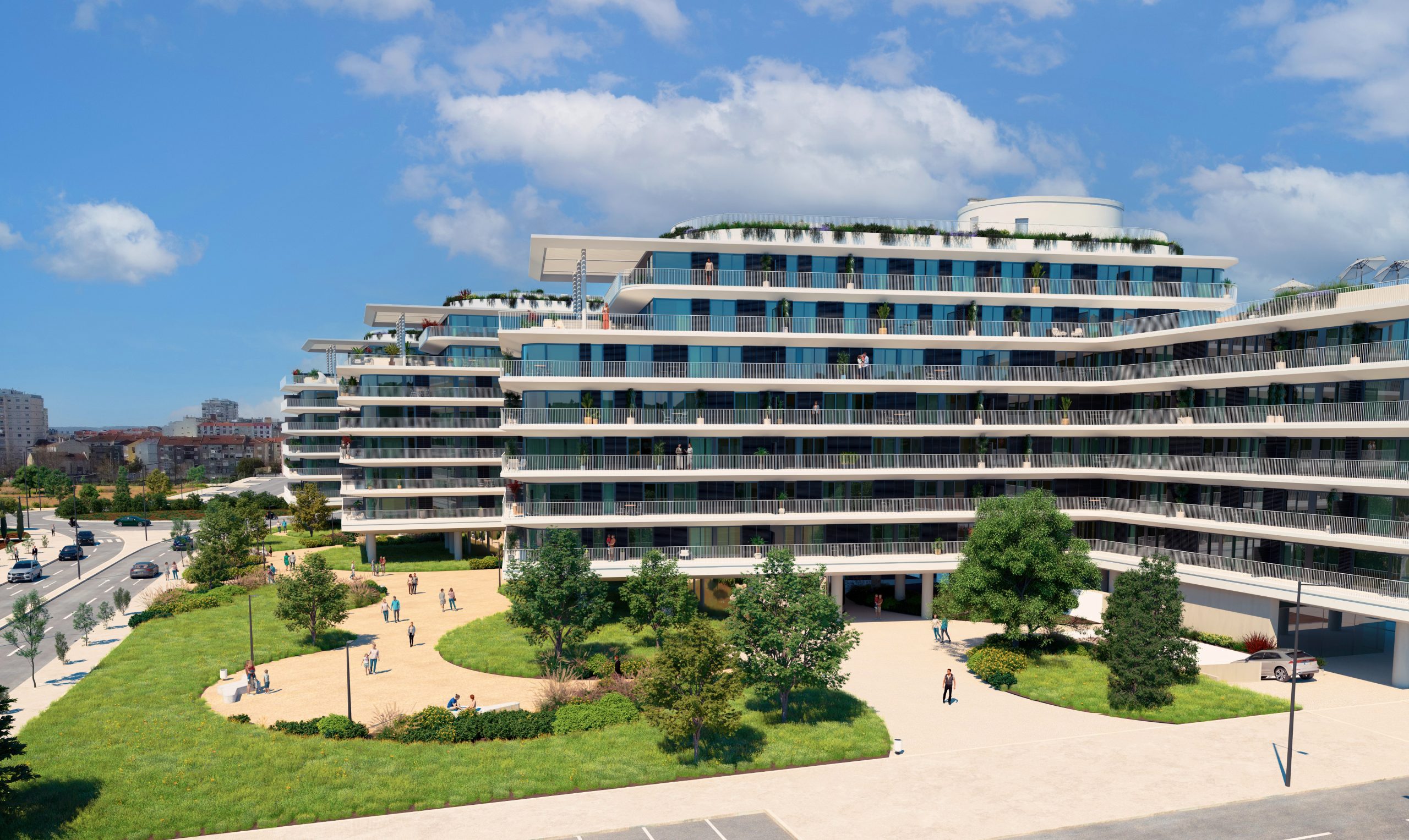
Nooba is a residential development on the Barreiro riverfront, designed for those who want river views, a swimming pool, a rooftop and a running track – without having to pay Lisbon prices. The project was designed by the architect responsible for the Portugal Pavilion at Expo Dubai and is currently in its third sales phase.
If you're considering Barreiro as your next home or investment, Nooba is worth a visit.
View available flats and book a visit →
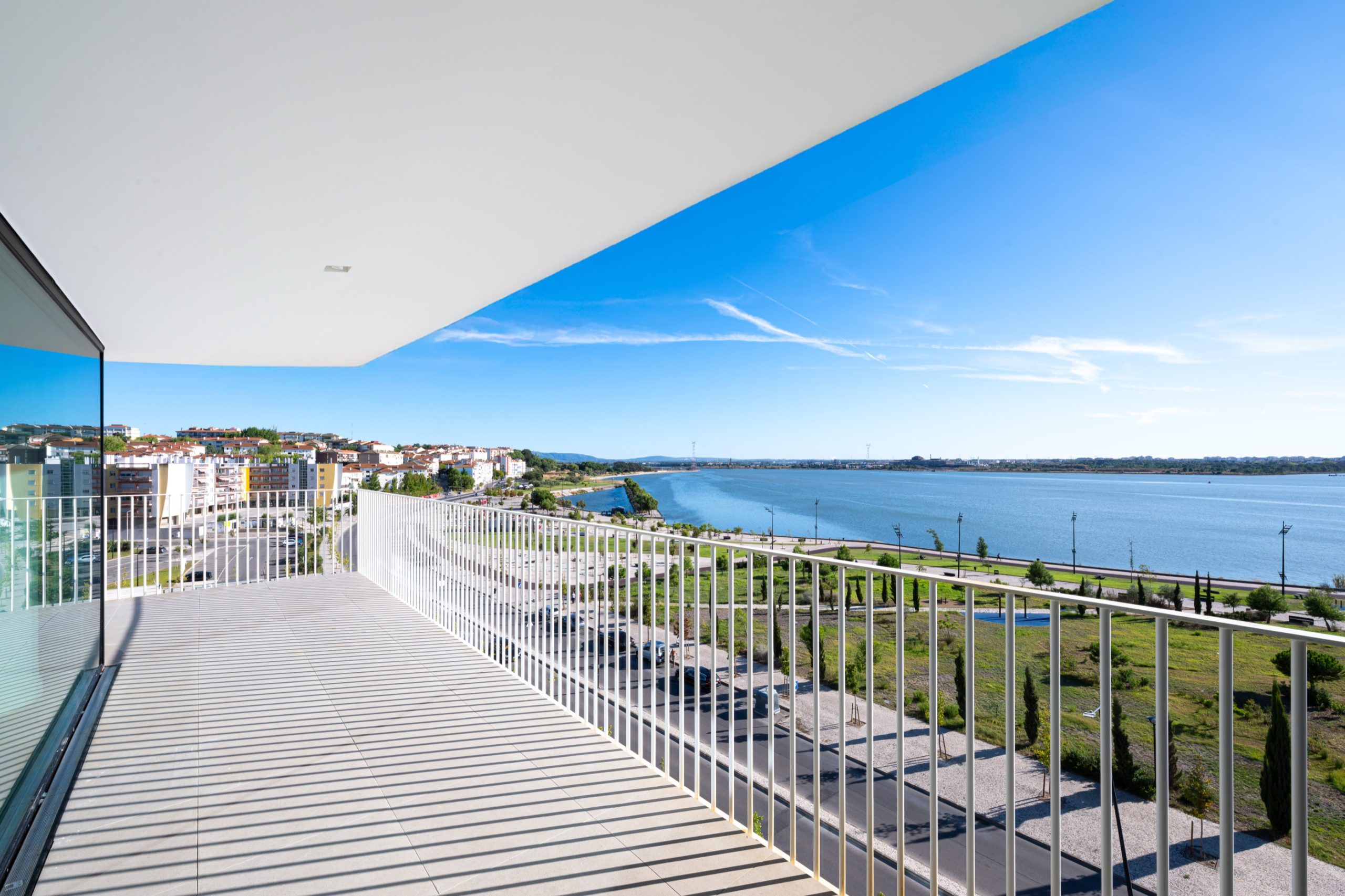
Discover the flats available at Nooba and book your visit.
View flatsFAQ's
Is Barreiro cheaper than Almada?
Yes. In June 2026, prices in Barreiro stood at €3,075/m² compared with €3,796/m² in Almada. A difference of around 23%. Barreiro is also appreciating in value more rapidly: prices rose by 24.1% compared with the previous year, almost double the 14.8% increase seen in Almada over the same period.
How long does it take to get from Barreiro to Lisbon?
The ferry from Barreiro to Cais do Sodré takes 20 minutes and runs regularly throughout the day. The Third Tagus Crossing, a road-and-rail bridge confirmed by the government for 2024, will provide a direct rail link to Eastern Lisbon, with operations scheduled to begin in the early 2030s.
How long does it take to get from Almada to Lisbon?
The ferry from Cacilhas to Cais do Sodré takes less than ten minutes – the quickest connection from the south bank to Lisbon. The Fertagus train, travelling along the lower deck of the 25 de Abril Bridge, reaches Pragal in around ten minutes from the city centre.
Is Setúbal a good place to live near Lisbon?
Setúbal offers a very high quality of life, with direct access to the Serra da Arrábida, prices of around €3,328 per square metre in 2026 and a strong local identity. The downside is the distance – around a 45-minute drive from Lisbon. It’s the right choice for remote workers and those who only travel to Lisbon a few times a week, but less practical for those who commute daily.
What's the best alternative to Lisbon for buying a house in 2026?
It depends on your priorities. For maximum connectivity, Almada. For nature and a break from Lisbon, Setúbal. For the strongest combination of proximity, price and potential for appreciation, Barreiro makes the most compelling case in 2026 – with a confirmed road-rail bridge, active urban regeneration and prices that do not yet reflect what is happening in the city.
What is the new Tagus Bridge and how does it affect Barreiro?
The Third Tagus Crossing is a 15-kilometre road-and-rail bridge linking Chelas, in Lisbon, to Lavradio, in Barreiro. The government confirmed the project in 2024. Environmental studies will take place throughout 2026, with the first construction tenders scheduled for the end of this year and the bridge expected to open in the early 2030s. Once completed, Barreiro will have a direct rail link to the East and to the entire national rail network.


